Olympic Ice Hockey 2026: Complete Guide to the Men’s and Women’s Tournaments at Milano Cortina

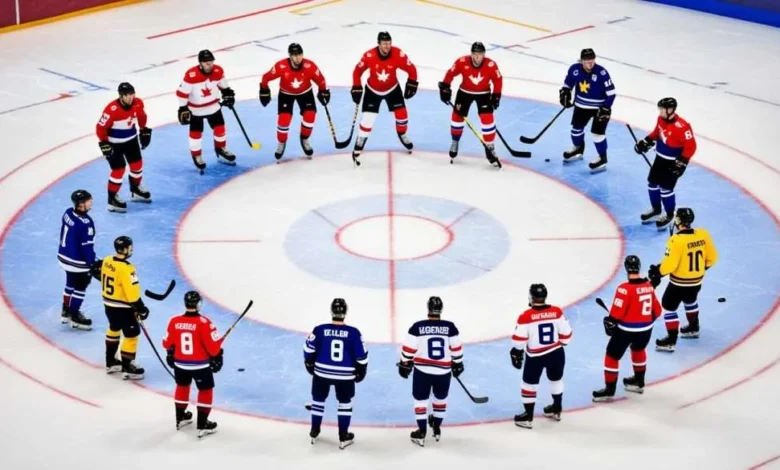
The 2026 Winter Olympics in Milano Cortina, Italy, mark a landmark moment for ice hockey enthusiasts worldwide. From February 6 to 22, 2026, the ice rinks of Milan host thrilling men’s and women’s tournaments featuring NHL superstars returning for the first time since Sochi 2014.
With 12 men’s teams and 10 women’s teams competing for gold, the event promises high-stakes action, legendary rivalries, and unforgettable performances.
Overview of the 2026 Winter Olympics and Ice Hockey’s Spotlight
The Milano Cortina 2026 Games bring the Winter Olympics back to Italy for the first time since Cortina 1956. Milan serves as the main hub for ice events, while Cortina d’Ampezzo handles alpine disciplines. Ice hockey stands out as one of the most anticipated sports, drawing massive global audiences due to the return of top NHL talent.
The tournament features 530 athletes from 13 nations, with Russia and Belarus excluded due to the ongoing situation in Ukraine. France fills the vacated spots in both men’s and women’s events.
The men’s competition uses a 12-team format divided into three groups of four, leading to a playoff bracket. The women’s event features 10 teams in two groups of five. Both culminate in quarterfinals, semifinals, a bronze-medal game, and the gold-medal final on February 22. NHL players participate after a league agreement for a mid-season break, elevating the skill level dramatically.
Venues for Ice Hockey at Milano Cortina 2026
Ice hockey events primarily occur at two state-of-the-art venues in the Milan area:
– Milano Santagiulia Ice Hockey Arena (also known as PalaItalia Santa Giulia): This newly constructed arena seats around 10,000 spectators and hosts many key matches, including high-profile preliminary games and playoff rounds. Its modern design offers excellent sightlines and atmosphere for intense international competition.
– Milano Rho Ice Hockey Arena (part of the Milano Ice Park at Fiera Milano): Located in a repurposed exhibition pavilion, this venue accommodates additional preliminary round games. Temporary structures ensure sustainability while providing a vibrant setting for fans.
Both venues deliver top-tier ice quality, lighting, and fan experiences optimized for Olympic competition. The Milan cluster centralizes ice events for logistical efficiency and fan accessibility.
History of Ice Hockey in the Winter Olympics
Ice hockey debuted as an Olympic sport in 1920 at the Summer Games in Antwerp, Belgium, but the first dedicated Winter Olympics in Chamonix, France (1924) solidified its place. Canada dominated early editions, winning gold in 1920, 1924, 1928, 1932, 1948, and 1952 with legendary teams like the Winnipeg Falcons and Toronto Granites.
The Soviet Union era began in 1956 at Cortina d’Ampezzo, ushering in a golden age of international hockey. The USSR claimed nine golds between 1956 and 1988, interrupted only by the United States’ “Miracle on Ice” victory in Lake Placid 1980—a seminal underdog triumph where a young American squad defeated the mighty Soviets en route to gold.
The NHL era transformed Olympic hockey starting in 1998 at Nagano, Japan. Professional players elevated skill and spectacle. Memorable moments include Canada’s 2002 Salt Lake City redemption with Mario Lemieux, Joe Sakic, and Martin Brodeur; the 2010 Vancouver final where Sidney Crosby’s golden goal defeated the United States in overtime; and the intense rivalries between Canada, the U.S., Russia, Sweden, and Finland.
Women’s ice hockey joined the program in 1998 at Nagano. The United States won the inaugural gold, but Canada established long-term dominance with multiple titles.
The rivalry between these North American powerhouses defines the women’s game, highlighted by dramatic finals in 2002, 2010, 2014, and 2018. Finland and Sweden have risen as consistent medal threats, while growth in Europe and Asia (e.g., Japan, Czechia) adds depth.
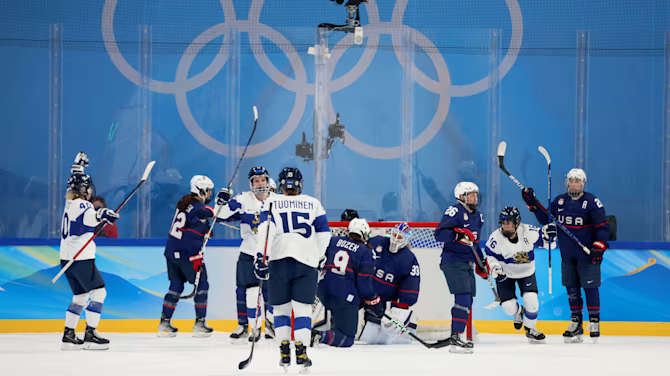
The 2022 Beijing Games, without NHL players, saw Finland claim men’s gold and Canada win women’s gold. The 2026 return of NHL talent promises a return to elite-level intensity.
“Read aLso: فيديو رحمة محسن المسرب 2026 الجديد: القصة الكاملة“
Tournament Format and Rules
Men’s Format: Three preliminary groups (A, B, C) play a round-robin. The top team from each group plus the highest-ranked second-place team advance directly to quarterfinals. The remaining eight teams play qualification round games. From quarterfinals onward, it is single-elimination: semifinals determine gold and bronze contenders, with a bronze-medal game and gold-medal final.
Women’s Format: Two groups of five play round-robin preliminaries. Top teams advance to quarterfinals, followed by semifinals, bronze, and gold-medal games.
Standard IIHF rules apply: three 20-minute periods, with overtime and shootouts for ties in elimination games. Rosters allow up to 25 players for men (22 skaters + 3 goalies) and 23 for women (20 skaters + 3 goalies). Body checking is permitted in men’s but restricted in women’s to promote skill and safety.
Participating Teams and Groups
Men’s Tournament (12 Teams):
– Group A: Canada, Czechia, Switzerland, France
– Group B: Finland, Sweden, Slovakia, Italy (host)
– Group C: United States, Germany, Latvia, Denmark
Women’s Tournament (10 Teams):
Two groups of five (exact groupings vary by seeding; top teams include United States, Canada, Finland, Sweden, Czechia, Switzerland, Germany, Japan, Italy, France).
Qualification relied on IIHF World Rankings post-2023 (men) and 2024 (women) championships, plus host Italy and three qualification tournament winners. France’s inclusion boosted European representation.
“Read aLso: فيديو الشيخة ميمي الذي تصدر التريند: التفاصيل الصادمة“
Key Players and Rosters to Watch
The 2026 men’s tournament features approximately 148 NHL players, many first-time Olympians. Standouts include:
– Canada: Sidney Crosby (veteran leader), Connor McDavid, Nathan MacKinnon, Cale Makar, Jordan Binnington in goal. Depth with Macklin Celebrini and Mitch Marner.
– United States: Auston Matthews (captain), Jack Hughes, Quinn Hughes, Matthew Tkachuk, Connor Hellebuyck and Jake Oettinger in net.
– Finland: Sebastian Aho, Mikko Rantanen, Miro Heiskanen, Juuse Saros.
– Sweden: William Nylander, Elias Pettersson, Rasmus Dahlin, Victor Hedman, Jacob Markstrom.
– Czechia: David Pastrnak, Tomas Hertl, Lukas Dostal.
– Other notables: Leon Draisaitl (Germany), Roman Josi (Switzerland), Juraj Slafkovsky (Slovakia).
Women’s rosters feature veterans like Hilary Knight (USA), Marie-Philip Poulin (Canada), and rising stars such as Taylor Heise (USA), alongside goaltenders Aerin Frankel (USA) and others. USA women’s roster includes established leaders like Cayla Barnes, Megan Keller, and Kendall Coyne Schofield.
Schedule Highlights (as of February 11, 2026)
Men’s Preliminary Round (selected games):
– Feb 11: Slovakia vs Finland (07:40), Sweden vs Italy (12:10)
– Feb 12: Switzerland vs France (03:10), Czechia vs Canada (07:40), Latvia vs United States (12:10)
– Feb 13-15: Continue group play, including USA vs Denmark (Feb 14), USA vs Germany (Feb 15).
Women’s games continue with key matchups like Finland vs Canada on Feb 12.
Playoffs ramp up mid-to-late February, with semifinals around Feb 20, bronze Feb 21, and gold Feb 22. All games stream on platforms like Peacock (U.S.), with select TV broadcasts on NBC, USA Network, etc. Check official sites for live updates, as the tournament progresses rapidly.
Current standings evolve daily. For instance, women’s Group A has shown strong performances by the United States early on. Men’s groups remain fluid with games just beginning.
Focus on Women’s Ice Hockey 2026
Women’s hockey has grown exponentially since 1998. The 2026 edition showcases deeper talent pools, with the USA-Canada rivalry as the centerpiece. The United States seeks redemption or continuation of dominance after recent World Championship successes, while Canada aims to defend its 2022 title.
Finland, Sweden, Czechia, and Switzerland pose threats in quarterfinals. Host Italy and Japan add excitement through home support and emerging programs. Expect fast-paced, skill-heavy play emphasizing speed, passing, and goaltending.
Men’s Ice Hockey 2026: Powerhouses and Underdogs
With NHL stars, the men’s event rivals Stanley Cup intensity. Canada and the United States are co-favorites, boasting unmatched forward depth and defensive talent. Finland and Sweden bring European style and resilience. Czechia, led by Pastrnak, eyes a breakthrough.
Underdogs like Latvia (2023 semifinalists), Denmark, Slovakia, and host Italy could spring surprises in tight group games. The playoff format rewards consistency but allows Cinderella runs.
Predictions and Contenders for Medals
Pre-tournament favorites for men’s medals: Canada (gold), United States (silver), Finland or Sweden (bronze). For women: United States or Canada gold, with Finland or Czechia as bronze contenders. Factors like goaltending, special teams, and injury management will decide outcomes. The return of NHL players promises higher scoring and star-driven moments.
How to Watch and Engage with Olympic Ice Hockey 2026
Global broadcasters cover the action extensively. In the U.S., NBCUniversal platforms (Peacock, USA Network, NBC) air games. Internationally, check local rights holders or the official Olympics app/streaming. Tickets remain available for select sessions via official sites.
Follow live scores, highlights, and player stats on olympics.com, IIHF.com, or NHL.com. Social media buzz amplifies the excitement with fan reactions and behind-the-scenes content.
Legacy and Broader Impact
Beyond medals, Milano Cortina 2026 ice hockey boosts Italy’s winter sports infrastructure, inspires youth participation, and promotes gender equity in athletics. Sustainable venue use and global unity underscore the Olympic spirit. The event cements ice hockey’s status as a flagship winter sport, blending tradition with modern athletic excellence.
In summary, the 2026 Olympic ice hockey tournaments deliver world-class competition, historic rivalries, and emerging stars on the grandest stage. Whether cheering for powerhouse nations or surprise contenders, fans witness peak athletic drama in Milan. Stay tuned for updates as the medals are decided through February 22. For the latest scores and highlights, visit official Olympic resources.