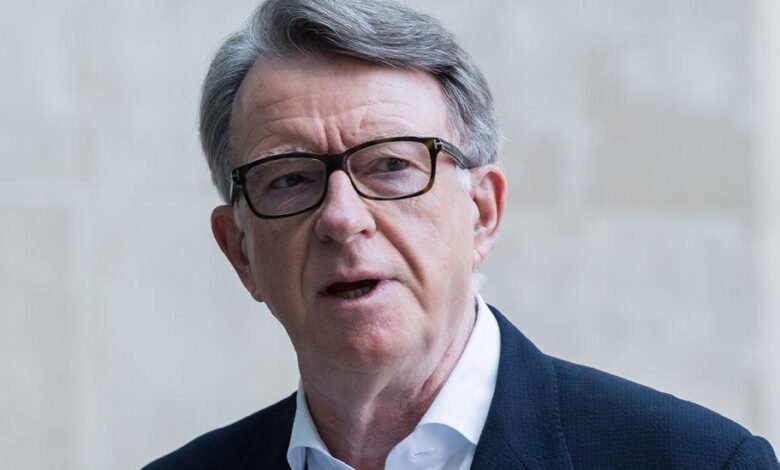
Peter Mandelson, often dubbed the “Prince of Darkness” for his masterful media manipulation and strategic acumen, stands as one of the most influential and controversial figures in modern British politics. Born on October 21, 1953, in Hendon, Middlesex, England, Mandelson’s career spans decades, marked by pivotal roles in reshaping the Labour Party, serving in high-level government positions, and navigating international diplomacy.
His journey from a young communist sympathizer to a key architect of Tony Blair’s New Labour project, and later to positions in the European Commission and as British Ambassador to the United States, reflects a life dedicated to political reinvention and policy innovation.
Despite repeated scandals that led to resignations and dismissals, Mandelson’s impact on UK politics remains profound, influencing everything from economic policy to international trade relations.
This comprehensive exploration delves into Mandelson’s early life, political ascent, major achievements, controversies, personal experiences, and lasting legacy. From his instrumental role in Labour’s 1997 landslide victory to his recent diplomatic endeavors and abrupt departures, Mandelson’s story encapsulates the highs and lows of public service in a rapidly changing world.
Early Life and Education: Foundations of a Political Mind
Peter Benjamin Mandelson was born into a family with deep political roots. His father, George Norman Mandelson, served as an advertising manager for The Jewish Chronicle and had been an officer in the Royal Dragoons during World War II.
His mother, Mary Joyce, was the daughter of Herbert Morrison, a prominent Labour politician who led the London County Council and served as a cabinet minister in Clement Attlee’s post-war government. Of Polish Jewish descent, Mandelson’s grandfather founded the Harrow United Synagogue, instilling in him a sense of community and heritage that shaped his worldview.
Raised in Hampstead Garden Suburb, Mandelson described his upbringing as one centered on the suburb’s values of friendship and communal support. He attended Garden Suburb School before moving to Hendon County Grammar School from 1965 to 1972. During his school years, Mandelson showed an early flair for performance, starring as the lead in an amateur production of The Winslow Boy in 1966.
His teenage years were marked by political awakening; opposed to the UK’s support for the United States in the Vietnam War, he joined the Young Communist League, a decision that foreshadowed his lifelong engagement with left-wing ideologies.
Mandelson’s higher education further honed his intellectual pursuits. He studied Philosophy, Politics, and Economics (PPE) at St Catherine’s College, Oxford, under tutors including the economist Nicholas Stern. This period exposed him to rigorous debate and economic theory, laying the groundwork for his future roles in trade and policy. While at Oxford, Mandelson’s political views evolved, moving away from communism toward a more centrist Labour perspective.
In 1978, as Chairman of the British Youth Council, Mandelson attended the World Festival of Youth and Students in Havana, Cuba, organized by the Soviet Union. This experience broadened his international outlook but also highlighted his growing disillusionment with extreme leftism.
By the early 1980s, he had transitioned into media, working as a television producer at London Weekend Television on the program Weekend World, where he formed a lasting friendship with John Birt, later Director-General of the BBC.
Entry into Politics: From Local Councils to National Influence
Mandelson’s formal entry into politics began with his election to Lambeth Council in a 1979 by-election. However, he stepped down in 1982, frustrated with the Labour Party’s direction under leader Michael Foot, whom he viewed as too radical and unelectable. This period of reflection led him to join the Labour Party staff under Neil Kinnock, who appointed him Director of Communications in 1985.
As Labour’s communications chief, Mandelson revolutionized the party’s media strategy. He was among the first to be labeled a “spin doctor,” earning the nickname “Prince of Darkness” for his shrewd, sometimes ruthless, handling of press relations. His efforts were evident in the 1986 Fulham by-election, where Labour defeated the Conservatives, and in the 1987 general election campaign.
Mandelson commissioned the acclaimed party broadcast “Kinnock – the Movie,” directed by Hugh Hudson, which boosted Kinnock’s approval ratings significantly, though Labour still lost to Margaret Thatcher’s Conservatives.
Leaving the party’s official staff in 1990, Mandelson sought a parliamentary seat, standing as the Labour candidate for Hartlepool in the 1992 general election.
His victory marked the beginning of his tenure as MP for Hartlepool, a role he held until 2004. During this time, he became a staunch advocate for the European Union and supported Tony Blair in the 1994 leadership contest following John Smith’s death. This alignment created tensions with Gordon Brown, Blair’s rival, setting the stage for one of British politics’ most infamous rivalries.
Mandelson was instrumental in rebranding the Labour Party as “New Labour,” emphasizing modernization, economic prudence, and appeal to middle-class voters. As campaign director for the 1997 election, he orchestrated a strategy that led to Labour’s historic landslide victory, ending 18 years of Conservative rule.
“فيديو رحمه محسن الأخير المسرب: التفاصيل الكاملة والقصة من البداية“
Key Governmental Roles: Shaping Policy Under Blair and Brown
Upon Labour’s 1997 win, Mandelson was appointed Minister without Portfolio, tasked with coordinating government policy. He oversaw the Millennium Dome project, a controversial endeavor that symbolized New Labour’s ambition but faced criticism for cost overruns.
In 1998, he became Secretary of State for Trade and Industry, where he introduced initiatives like the Millennium Bug and Electronic Commerce Bill and a Competitiveness White Paper. Notably, he urged the continuation of the Post Office’s Horizon IT system, later implicated in a major scandal affecting sub-postmasters.
His first resignation came in December 1998 amid revelations of an undeclared £373,000 interest-free loan from Geoffrey Robinson, a fellow MP, to purchase a home. The loan raised conflict-of-interest concerns, as Robinson’s business dealings were under investigation by Mandelson’s department. Cleared by an inquiry, Mandelson returned to Cabinet in 1999 as Secretary of State for Northern Ireland.
There, he played a crucial role in implementing the Good Friday Agreement, overseeing the creation of a devolved assembly, power-sharing executive, and reforms to the Police Service of Northern Ireland (PSNI).
However, controversy struck again in January 2001 when Mandelson resigned over allegations he influenced a passport application for Indian billionaire Srichand Hinduja, who was under investigation in India. An inquiry by Sir Anthony Hammond cleared him of wrongdoing, but the episode damaged his reputation.
European Commission Tenure: Global Trade and Diplomacy
In 2004, Mandelson resigned as MP to become the European Commissioner for Trade under José Manuel Barroso. During his 2004–2008 term, he navigated complex international trade negotiations, including the Doha Development Round and EU-China relations.
He faced criticism from figures like French President Nicolas Sarkozy over trade policies and the Lisbon Treaty referendum. Mandelson’s time in Brussels enhanced his expertise in global economics and solidified his pro-EU stance.
Controversies persisted; he was scrutinized for yacht holidays with Microsoft co-founder Paul Allen in 2005 and Italian businessman Diego Della Valle in 2006. More significantly, meetings with Russian oligarch Oleg Deripaska in 2008 raised questions about potential conflicts, as Deripaska benefited from EU tariff decisions favoring aluminum imports.
“فيديو هدير عبد الرازق الجديد الثاني: التفاصيل الكاملة الصادمة“
Return to UK Politics: Business Secretary and Peerage
In 2008, Gordon Brown, now Prime Minister, recalled Mandelson to UK politics, elevating him to the House of Lords as Baron Mandelson of Foy in the County of Herefordshire and of Hartlepool in the County of Durham. Appointed Secretary of State for Business, Enterprise and Regulatory Reform (later Business, Innovation and Skills), Mandelson oversaw the Digital Economy Act 2010, which included provisions for disconnecting internet users suspected of piracy.
From 2009 to 2010, he served as First Secretary of State and Lord President of the Council, effectively Brown’s deputy. He chaired numerous Cabinet committees, influencing policy during the global financial crisis. His return bridged the Blair-Brown divide, though tensions lingered.
Business and Advisory Roles: Post-Government Ventures
After Labour’s 2010 election defeat, Mandelson founded Global Counsel, a lobbying and advisory firm, in 2010. The company advised high-profile clients including Shein, Shell, and TikTok, drawing criticism for potential conflicts of interest. He also served as a senior adviser to Lazard from 2011 to 2022 and participated in the Bilderberg Group meetings from 1999 to 2014.
Mandelson remained active in Labour politics, opposing Jeremy Corbyn’s leadership and advocating for a second Brexit referendum. He supported the UK’s bid for WTO leadership and advised Keir Starmer ahead of the 2024 election, contributing to Labour’s revival of New Labour principles.
Recent Activities and Ambassadorship: Diplomatic Highs and Lows
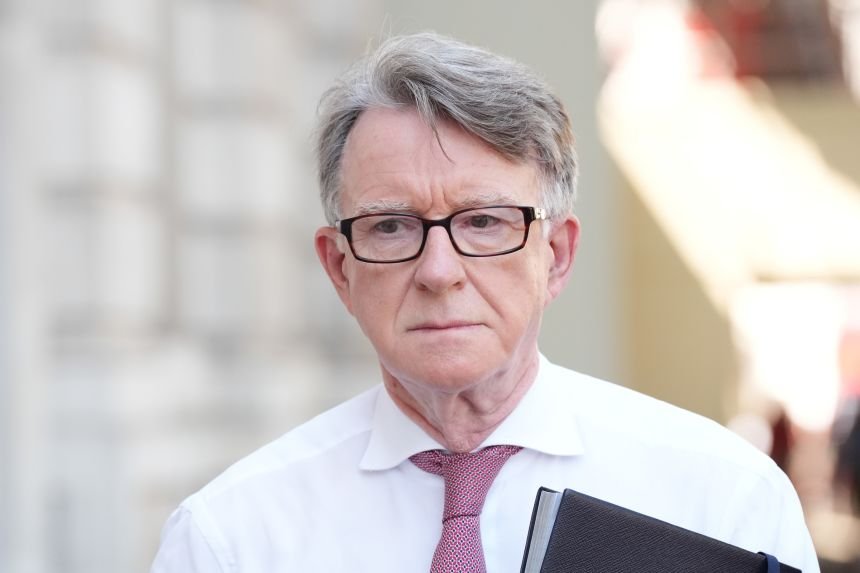
In February 2025, Prime Minister Keir Starmer appointed Mandelson as British Ambassador to the United States, focusing on strengthening UK-US trade ties amid challenges like tariffs under President Donald Trump. His tenure emphasized post-Brexit diplomacy and economic partnerships.
However, his ambassadorship ended abruptly in September 2025 following revelations about his association with convicted sex offender Jeffrey Epstein. Documents showed Mandelson maintained contact with Epstein after his 2008 conviction, including supportive emails and alleged leaks of sensitive information.
Mandelson was dismissed, and further releases in 2026 revealed payments of $75,000 from Epstein and leaks of government details, such as asset sales, tax plans, and EU bailout information.
In February 2026, Mandelson resigned from the Labour Party to avoid “further embarrassment” and announced his intention to retire from the House of Lords. The Metropolitan Police launched a criminal investigation into allegations of misconduct in public office, including leaking market-sensitive information to Epstein during his time as Business Secretary.
This scandal led to the stripping of honors, including his role as High Steward of Hull and Chancellor of Manchester Metropolitan University.
Controversies and Scandals: A Career Marred by Resignations
Peter Mandelson’s career is as defined by scandals as by achievements. His 1998 resignation over the Robinson loan highlighted issues of transparency and conflicts. The 2001 Hinduja passport affair, though he was cleared, reinforced perceptions of undue influence.
In 2008, his interactions with Deripaska sparked accusations of favoritism. The 2009 expenses scandal saw him claim £3,000 for home maintenance after resigning as MP, raising questions about propriety.
The Epstein association proved devastating. Revelations included handwritten notes calling Epstein a “best pal,” post-conviction support, and alleged leaks of confidential data during the 2008 financial crisis, such as Gordon Brown’s resignation plans and EU bailout details. These prompted police investigations and calls for Mandelson to testify in the US.
Despite these setbacks, Mandelson has denied wrongdoing, emphasizing his contributions to public life.
Personal Life: Privacy Amid Public Scrutiny
Mandelson is openly gay but maintains a private personal life. He has been in a relationship with Brazilian translator Reinaldo Avila da Silva since 1998; the couple married in 2023. Outed by the media in 1987 and 1998, Mandelson faced harassment but handled it with resilience.
Health challenges include a 2008 hospitalization for a kidney stone, unrelated to a Chinese yoghurt scandal. He owns a collie dog named Jock, adding a touch of normalcy to his high-profile existence.
Writings and Intellectual Contributions
Mandelson has authored several books that provide insight into his political philosophy. Co-written with Roger Liddle, The Blair Revolution: Can New Labour Deliver? (1996, revised 2002) outlines the vision for modernizing Labour.
His memoir, The Third Man: Life at the Heart of New Labour (2010), offers a candid look at the Blair-Brown-Mandelson triangle, revealing internal dynamics and personal reflections. He also contributed to A Bazaar Life: The Autobiography of David Alliance (2015) and debated European issues in Has the European Experiment Failed? (2012).
These works cement his role as a thinker on progressive politics, trade, and globalization.
Legacy and Influence: A Complex Political Inheritance
Peter Mandelson’s legacy is multifaceted. As a co-founder of New Labour, he transformed the party into an electable force, influencing policies on education, welfare, and the economy. His work in Northern Ireland advanced peace, and his trade expertise shaped EU and UK strategies.
Yet, scandals have overshadowed these accomplishments, portraying him as emblematic of cronyism and ethical lapses in politics. His Epstein ties, in particular, have shaken the British establishment, raising questions about accountability and judgment in high office.
Despite this, Mandelson’s strategic mind continues to influence Labour under Starmer, who credits him with aiding the 2024 victory. As Britain navigates post-Brexit challenges and global uncertainties, Mandelson’s emphasis on pragmatism and internationalism remains relevant.
In conclusion, Peter Mandelson’s biography is a testament to resilience and reinvention. From humble beginnings to the pinnacles of power, his career reflects the turbulent nature of politics. While controversies may define his public image, his contributions to Labour’s modernization and policy innovation ensure his place in history as a pivotal figure in British governance.