DJI Drone Manufacturing: Inside the High-Tech Factories Powering the Global Drone Revolution

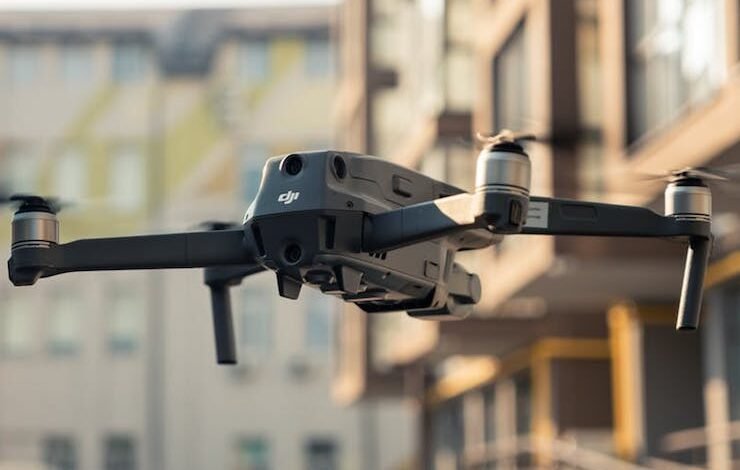
DJI drone manufacturing is more than just an industrial process—it is a technological revolution that reshaped modern aviation. From a messy university dorm room experiment to a global empire commanding over 70% of the world’s civilian drone market, DJI’s journey represents one of the most remarkable transformations in robotics history.
High above the icy peaks of Mount Everest, a lightweight flying machine hovers with stunning stability despite the thin, freezing air. That machine is the product of DJI drone manufacturing—an ecosystem so precise that even a microscopic soldering flaw is treated as catastrophic.
But how does a plastic-and-copper device survive 300-foot falls or track a racing car at 60 mph with cinematic smoothness? The answer lies deep inside Shenzhen’s advanced robotics factories.
This article takes you inside the assembly lines where raw earth, lithium, copper, silicon, and carbon fiber are transformed into intelligent flying systems redefining the global low-altitude economy.
The Origins of DJI Drone Manufacturing
The story begins in 2005 at the Hong Kong University of Science and Technology. A young student named Frank Wang became obsessed with flight mechanics. His graduation thesis focused on flight control systems for remote-controlled helicopters.
Although his prototype crashed during the final presentation, the failure strengthened his determination. In 2006, he moved to Shenzhen with a small loan from his parents and an ambitious vision: create a system anyone could fly.
The early years were brutal. A tiny team worked from a cramped storage room. But their perfectionist mindset demanded that every screw be tightened with an intuitive precision built on experience. By 2009, they achieved a milestone: a flight control system capable of stabilizing itself without user input.
This breakthrough ended the era of shaky aerial footage and signaled the rise of modern civilian drones.
Market Shift and the Birth of a Global Leader
In the early 2010s, the company noticed that gimbals for multi-rotor drones were selling 10 times faster than traditional helicopter controls. This pivot led to the 2011 launch of the Wukong multi-rotor control system—a massive success thanks to unmatched stability.
By 2013, the Phantom series transformed complex aerospace engineering into a plug-and-play consumer product. DJI drone manufacturing had officially sparked the global civilian drone market.
Today, the company employs over 14,000 people across North America, Europe, and Asia.
Raw Materials: The Global Supply Chain Behind DJI Drone Manufacturing
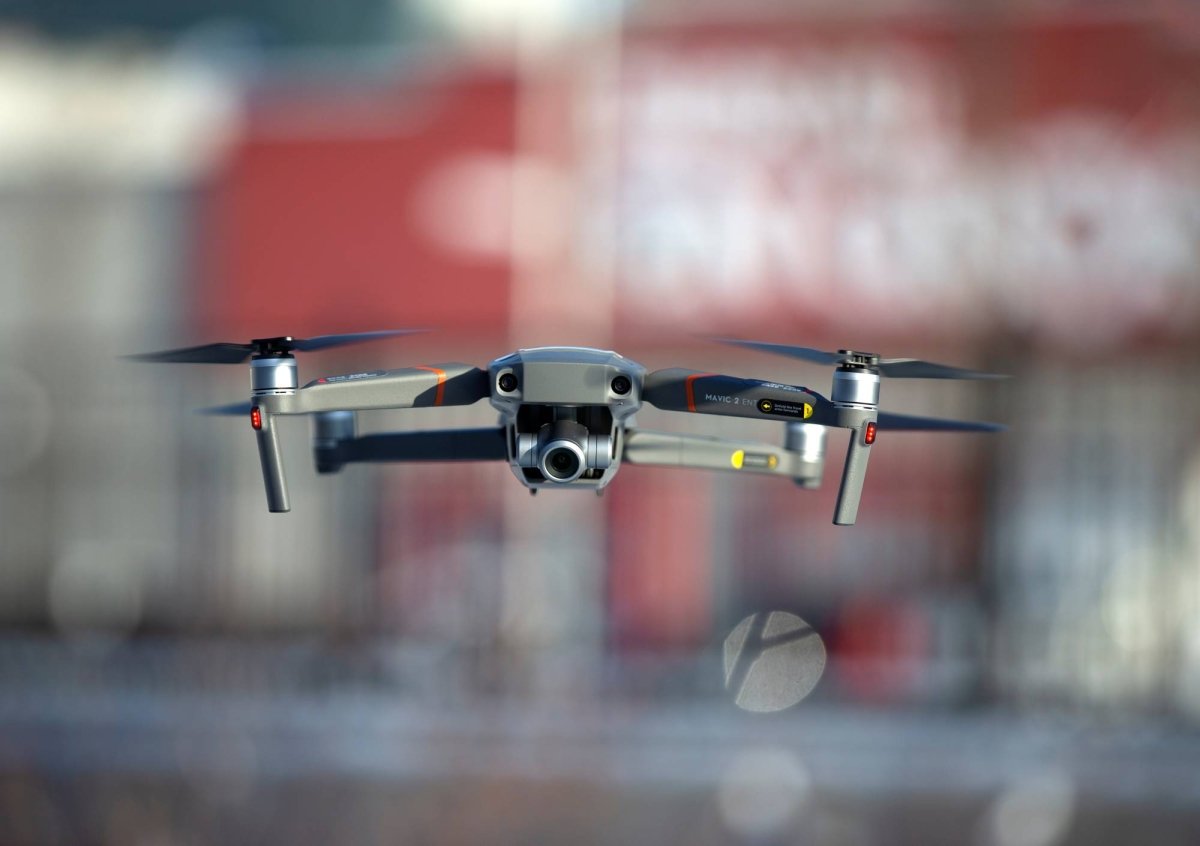
Building a high-precision drone requires materials sourced from nearly half the periodic table.
Lithium and Battery Foundations
Lithium-ion batteries power modern drones. Raw lithium often comes from Chile’s salt lakes or Australian mines, which account for nearly 45% of global production.
Cobalt—essential for thermal stability—is primarily sourced from the Democratic Republic of Congo. Natural graphite, dominated by Chinese production (76%), forms critical battery components.
Structural Materials and Metal Processing
For industrial units, aluminum is derived from bauxite ore mined in equatorial regions. Through biochemical refinement into alumina and the Hall electrolytic process, pure aluminum emerges. This metal is cast into extrusion ingots and shaped into lightweight aircraft frames.
Consumer drones use high-pressure injection molding of glass-filled polycarbonate—flexible enough to survive crashes, rigid enough for high-speed flight.
Every gram matters. The ratio between propeller size and airframe weight determines overall energy efficiency.
Shenzhen: The Epicenter of DJI Drone Manufacturing
Shenzhen offers direct access to the world’s largest electronics supply chain. This geographical advantage enables rapid prototyping—design iterations can become physical prototypes in days.
Truckloads of high-purity copper, industrial carbon fiber sheets, and electronic components arrive around the clock to support 24/7 operations.
The 25,000-square-meter factory stores materials in climate-controlled silos. Automated conveyors move components into ISO-certified clean rooms where air filtration prevents dust contamination.
Even senior managers must place their phones in opaque bags—intellectual property protection is taken seriously.
The Heart of DJI Drone Manufacturing: Flight Controller Production
The flight controller is the drone’s brain. Produced on surface-mount technology lines, robotic arms place thousands of microscopic components per hour onto printed circuit boards. Microcontrollers from the STMicroelectronics 32F4 series handle complex computing tasks required for sensorless field-oriented control algorithms.
Boards pass through multi-zone reflow ovens with temperature tolerances of just 2°C to ensure perfect soldering.
Why Solder Quality Is Critical
- Dull solder joints are considered flight risks.
- Optical inspection systems scan for cold joints or bridged connections.
- Every connection must be thermally stable and electrically flawless.
This electronic brain houses gyroscopes and accelerometers performing thousands of calculations per second to maintain stable hover.
Reliability here is the primary defense against mid-air failure.
Propulsion Engineering: Brushless Motor Precision
Brushless DC motors are central to DJI drone manufacturing.
They offer:
- 83% lower failure rates than brushed motors
- 28 laminated silicon steel stator layers (0.2 mm thick)
- 15% reduction in iron loss
Copper coils are wound with extreme precision. High-power professional units may use manual winding to increase copper density and achieve up to 92% efficiency.
Rotors contain rounded high-grade magnets minimizing air gaps. Each rotor undergoes high-speed balancing. Even microscopic imbalances are corrected with precision epoxy.
The result? Motors reach 2,500 RPM in less than one-third of a second.
“Read Also: How Products Are Made“
Three-Axis Gimbal: The Secret to Cinematic Stability
A drone’s gimbal compensates for vibration and motion with 400 adjustments per second.
Inside clean rooms, high-resolution camera modules—some featuring 4/3-inch sensors—are integrated with extreme care.
Gimbal Calibration Process
- Mounted on precision-leveled surfaces
- Auto-calibration zeros pitch and roll sensors
- Software-defined mechanical stops prevent accidental landing gear capture
This stabilization system can compensate in winds up to 60 mph.
Automated Flight Testing and Calibration
Before distribution, every drone enters a 3m x 3m x 7m calibration cage.
Inside:
- Automated takeoffs and landings occur without pilots
- Compass data is compared with GPS signals
- Omnidirectional sensors detect obstacles
- Motors ramp to 100% throttle while tethered
If instability appears—even minor—units are flagged for recalibration.
Extreme Environmental Testing
Industrial models undergo testing in conditions ranging from -35°C to 50°C.
Wind tunnels simulate 12 m/s resistance for consumer units. Extreme weather chambers test rain and freezing environments.
Battery safety testing includes:
- Pressure mapping
- Thermal runaway simulations
- Low-pressure altitude conditions
Only after surviving these simulations does a drone receive final approval.
Beyond Consumer Drones: Industrial and Agricultural Giants
DJI drone manufacturing extends into:
- Agricultural drones carrying 50 kg payloads
- Radar-equipped crop-spraying systems
- Heavy-lift industrial platforms
In 2025 alone, over 200,000 agricultural units were shipped—100 times more than a decade prior. These drones now treat over 500 million hectares of farmland globally.
Packaging and Global Distribution
Once approved, robotic arms fold airframes into shipping configurations.
Batteries auto-discharge to approximately 60% storage level to prevent degradation.
Each unit is boxed with:
- Remote controller
- Spare propellers
- Documentation
A massive logistics network distributes products to over 100 countries via ships, trucks, and cargo flights.
Economic Impact of DJI Drone Manufacturing
The company controls approximately 70% of the global civilian drone market.
- 2021 sales reached $24 billion
- Projected revenue exceeds $55 billion by 2030
- $116 billion economic contribution
- Nearly 450,000 jobs supported in the United States
Vertical integration and thousands of patents sustain competitive dominance.
The Future of High-Precision Flight
From lithium mines and bauxite pits to Shenzhen’s high-tech clean rooms, DJI drone manufacturing represents the fusion of human ambition and robotic precision.
Every smooth aerial shot, every precise agricultural spray, and every search-and-rescue mission reflects insane testing protocols and uncompromising engineering standards.
The low-altitude economy is only just beginning.
Frequently Asked Questions About DJI Drone Manufacturing
1. Why does DJI dominate the civilian drone market?
Its vertical integration, rapid prototyping in Shenzhen, and advanced testing systems give it a technological and logistical advantage.
2. What makes DJI drones more stable than cheaper alternatives?
High-precision flight controllers, advanced gimbals, and rigorous calibration eliminate instability.
3. How are DJI batteries tested for safety?
Through pressure mapping, thermal runaway simulations, and extreme altitude testing.
4. How fast can DJI motors respond?
They reach 2,500 RPM in less than one-third of a second thanks to brushless DC engineering.
5. Are DJI drones tested in extreme weather?
Yes. Industrial models operate between -35°C and 50°C and undergo rain and wind tunnel testing.
Conclusion: DJI Drone Manufacturing and the Great Frontier of Innovation
DJI drone manufacturing is not simply about building flying cameras—it is about redefining aerospace accessibility for the modern world. From university research to a global industrial empire, the company transformed fragile hobby toys into precision robotics platforms powering filmmaking, agriculture, search and rescue, and infrastructure inspection.
Behind every stable hover and cinematic tracking shot lies an ecosystem of raw materials, high-speed automation, and uncompromising quality control.
Now we want to hear from you.
Do you use drone technology for work or personal projects? Which innovation do you believe will shape the future of aviation?
Share your thoughts below—and stay tuned for the next leap in high-speed robotics.