Semiconductor Manufacturing Process: Inside One of Germany’s Most Advanced Chip Factories

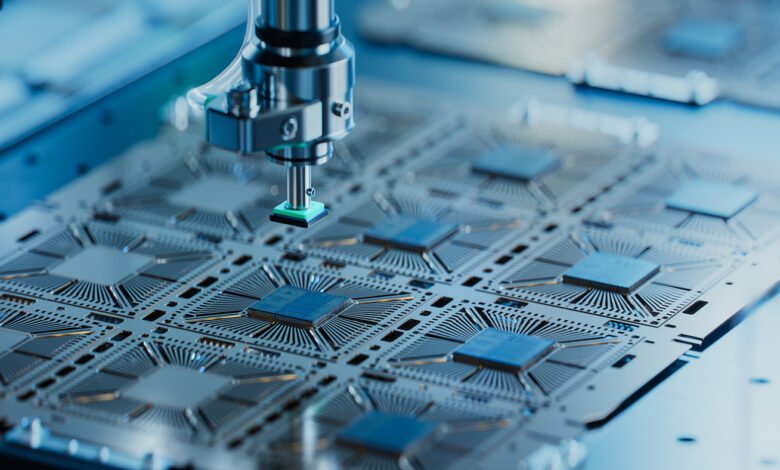
The semiconductor manufacturing process is one of the most advanced and precise industrial operations in the modern world. Inside a state-of-the-art facility in Germany, engineers and machines work together to produce nearly 1 billion micromechanical sensors every year—tiny components that power smartphones, vehicles, and countless smart devices.
This article takes you deep inside a futuristic semiconductor factory, where silicon wafers are transformed into intelligent microchips through thousands of highly controlled steps. From clean rooms to AI-driven automation, discover how the invisible technology behind everyday electronics is made.
What Is the Semiconductor Manufacturing Process?
The semiconductor manufacturing process refers to the series of highly complex steps used to transform raw silicon into functional electronic components.
The Role of Semiconductors
Semiconductors are materials that can both conduct and insulate electricity. This unique property makes them essential for:
- Sensors (the “senses” of devices)
- Processors (the “brain” of devices)
- Actuators (the “muscles” of devices)
These tiny components enable modern technology—from smartphones and fitness trackers to advanced automotive systems.
Silicon: The Foundation of Modern Electronics
At the core of every semiconductor lies silicon, a material derived from sand.
From Sand to Silicon Wafers
The process begins with:
- Extracting high-purity silicon
- Forming it into solid rods (ingots)
- Slicing the ingots into thin discs called wafers
Each wafer serves as the base for building micro-scale electronic structures.
Why Silicon?
Silicon is ideal because:
- It has both conductive and insulating properties
- It can be precisely engineered at the atomic level
- It is abundant and relatively cost-effective
Inside the Clean Room: Where Precision Begins
The semiconductor manufacturing process takes place in ultra-clean environments known as clean rooms.
Why Clean Rooms Are Critical
Even microscopic particles can damage chip structures that are:
- 1,000 times smaller than a human hair
- Extremely sensitive to contamination
Strict Entry Procedures
Before entering:
- Workers must wear full-body suits
- Only the eyes remain exposed
- Airlocks remove dust and particles
The result? Air purity so high it’s compared to finding a cherry pit in a vast lake.
The Wafer Journey: Thousands of Process Steps
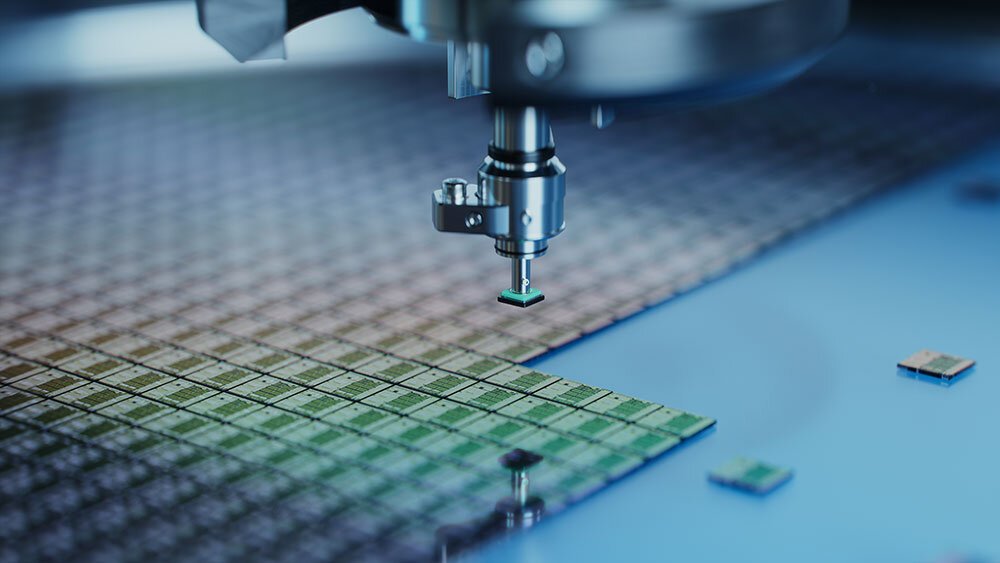
Each silicon wafer undergoes up to 1,000 processing steps over several weeks or even months.
Repeated Layering Like Building a House
The process is similar to constructing a multi-story building:
- Each layer adds functionality
- Steps are repeated to build complexity
- Up to 36 layers may be applied
Automation in Motion
- Up to 70,000 wafers move through the factory simultaneously
- Robots transport wafers between machines
- Software determines the optimal path for each wafer
This level of automation ensures efficiency and precision.
“Read Also: Hydroelectric Maintenance and Industrial Repair“
Photolithography: The Heart of Chip Design
One of the most critical stages in the semiconductor manufacturing process is photolithography.
How It Works
- Light-sensitive materials are applied to wafers
- Patterns are projected onto the surface using light
- Chemical processes etch these patterns into the silicon
Why Yellow Light?
The process uses yellow lighting to prevent accidental exposure of photosensitive materials.
Function of Photolithography
It acts as the blueprint system, defining the structure of each chip layer.
The Bosch Process: A Breakthrough in Sensor Manufacturing
A key innovation in micromechanical sensor production is the Bosch process.
What Makes It Unique?
- Enables creation of extremely fine silicon structures
- Allows sensors to measure motion, pressure, and acceleration
Impact on Technology
This process revolutionized:
- Automotive safety systems
- Smartphone sensors
- Wearable devices
Ion Implantation: Engineering Electrical Properties
Another critical step in the semiconductor manufacturing process is ion implantation.
What Happens During Ion Implantation?
- Charged particles (ions) are accelerated at high speeds
- They are embedded into the silicon wafer
- This changes the material’s electrical conductivity
Extreme Precision
- Voltages up to 1 million volts are used
- Particles travel at near light speed
- Depth and concentration are precisely controlled
This step is essential for creating transistors and other electronic components.
“Read Also: Engineering“
Automation and AI in Semiconductor Production
Modern semiconductor factories rely heavily on automation and artificial intelligence.
Smart Robotics
- Robots operate autonomously
- They coordinate movements like traffic systems
- Humans intervene only when necessary
Digital Twin Technology
A digital twin replicates the entire production process:
- Tracks wafer location and status
- Optimizes workflow
- Prevents bottlenecks
AI in Quality Control
Artificial intelligence is used to:
- Detect defects
- Improve inspection accuracy
- Learn from data over time
Quality Control: Ensuring Perfect Chips
Every chip must pass rigorous testing before leaving the المصنع.
Electrical Testing
- Each chip is tested individually
- Measurement needles contact microscopic نقاط
- Faulty chips are identified and removed
Visual Inspection
Advanced camera systems:
- Scan every chip
- Compare it to ideal reference images
- Detect even invisible defects
100% Testing Coverage
No chip leaves the facility without full verification.
Storage and Logistics: The Die Bank System
Once production is complete, wafers are stored in specialized facilities.
What Is a Die Bank?
A die bank is a strategic storage system where:
- Finished wafers are محفوظة
- Ready for rapid delivery
Controlled Environment
- Stored in nitrogen to prevent corrosion
- Can remain محفوظة for up to 10 years
Fast Response to Market Demand
This system allows manufacturers to:
- Fulfill orders quickly
- Avoid production delays
The Future of Semiconductor Manufacturing
The semiconductor manufacturing process continues to evolve rapidly.
Emerging Technologies
- Silicon carbide (SiC) for improved efficiency
- Applications in electric vehicles
- Enhanced performance in الطاقة systems
Industry Trends
- Autonomous driving
- Internet of Things (IoT)
- 5G connectivity
These innovations will shape the next generation of electronics.
FAQs About Semiconductor Manufacturing Process
1. What is the semiconductor manufacturing process?
It is the process of converting silicon into electronic components through multiple مراحل like photolithography, etching, and testing.
2. Why are clean rooms important?
They prevent contamination that could damage extremely small chip structures.
3. How long does chip production take?
It can take from a few weeks up to three months depending on complexity.
4. What are MEMS sensors?
They are micro electromechanical sensors used in devices like smartphones and cars to measure motion and pressure.
5. Why is automation used in semiconductor factories?
Because the process is too complex for humans to manage manually, requiring precision and real-time decision-making.
semiconductor manufacturing process: Conclusion
The semiconductor manufacturing process is a remarkable blend of science, engineering, and innovation. From raw silicon to intelligent microchips, every step requires extreme precision, advanced technology, and seamless coordination.
Inside modern factories, millions of components are produced daily—powering the devices we rely on every day. As technology continues to evolve, semiconductor manufacturing will remain at the heart of progress, enabling smarter, faster, and more connected systems.
If you found this deep dive into semiconductor manufacturing insightful, feel free to share it or leave a comment—technology shapes our world, and understanding it brings us one step closer to the future.