Galaxy Chocolate Manufacturing Process: From Tropical Cacao Beans to Silky Perfection

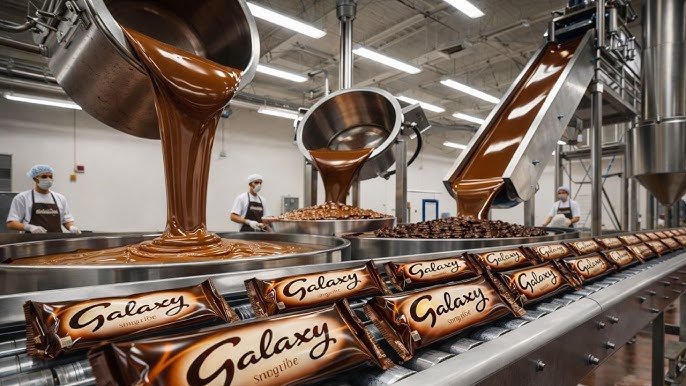
The Galaxy chocolate manufacturing process is far more than a simple food production line—it is a masterclass in precision engineering, agricultural science, and sensory perfection. Every single day, global production lines manufacture more than one million bars, transforming raw tropical cacao beans into one of the world’s smoothest and most recognizable chocolate experiences.
What appears to be a simple shelf-stable treat is, in reality, the result of decades of innovation, controlled chemical reactions, robotic automation, and a carefully guarded milk crumb method that defines its signature silkiness. From the rainforests near the equator to high-speed wrapping machines in the United Kingdom, this journey reveals how history, physics, and technology merge to create a global icon.
In this in-depth guide, we will explore every stage of the Galaxy chocolate manufacturing process—uncovering the science, heritage, and industrial precision that have set the gold standard for smooth milk chocolate for over 60 years.
The Origins of a Global Chocolate Icon
The story begins in 1930s Chicago with a Greek-American entrepreneur named Leo Stefanos, who owned a small shop called Dove Candies and Ice Cream. His philosophy centered on one principle: uncompromising quality.
In 1956, a turning point came when Stefanos saw his son chasing an ice cream truck down a busy street. Determined to create a safer treat his child could enjoy at home, he developed a premium ice cream bar dipped in ultra-smooth chocolate. This innovation became a local sensation.
By 1986, the American business was acquired by Mars, Incorporated, integrating it into a global snacking portfolio. Meanwhile, across the Atlantic, a parallel success story had already begun.
In 1960, the company launched its premier milk chocolate bar in the United Kingdom under the name Galaxy, avoiding confusion with a popular soap brand. Marketed for its silkiness and refined texture, the product quickly gained deep consumer loyalty.
Although the brand name differs in certain markets, the engineering principles behind the chocolate remain fundamentally identical worldwide.
The Galaxy Chocolate Manufacturing Process Step by Step
Sourcing Cacao: The Tropical Beginning
The Galaxy chocolate manufacturing process begins thousands of miles from the factory floor in tropical rainforests within 20° of the equator.
Harvesting the Cacao Pods
Cacao beans are primarily sourced from countries such as Côte d’Ivoire, Ghana, and Ecuador. Millions of cacao trees thrive under shaded forest canopies. Each pod is harvested by hand during two main crop seasons.
Farmers carefully open the pods with machetes to extract the beans, which are surrounded by sweet white pulp.
Fermentation: The First Flavor Transformation
Fermentation lasts between three and seven days. During this stage:
- Natural microorganisms break down sugars.
- Heat builds naturally within the pulp.
- Chemical precursors of chocolate flavor develop.
This biological process determines the final flavor complexity and rich brown color.
Drying for Stability
After fermentation, beans are sun-dried until moisture levels drop to approximately 6%. This ensures safe transport across oceans without spoilage.
“Read Also: DJI Drone Manufacturing“
Cleaning and Roasting: Unlocking Aroma
Upon arrival at the industrial facility, the beans enter an advanced cleaning system.
- Powerful vacuums remove dust and sand.
- Mechanical sieves eliminate fibers and foreign materials.
Roasting: The Cornerstone of Flavor
The beans are roasted in giant rotary cylinders at around 120°C for up to 30 minutes. Roasting:
- Reduces residual moisture
- Intensifies aroma
- Develops characteristic chocolate notes
After roasting, rapid cooling preserves the flavor profile.
Winnowing and Grinding: Creating Cocoa Liquor
Roasted beans pass through a winnowing machine that cracks them open. Fans blow away the brittle outer shells, leaving behind cacao nibs—the lipid-rich core containing over 50% cocoa butter.
These nibs are ground between heavy steel discs. Friction generates heat, melting the cocoa butter and forming a thick liquid known as cocoa liquor. Cocoa liquor serves as the foundation for the entire Galaxy chocolate manufacturing process.
“Read Also: Dyson Cordless Vacuum Technology“
The Secret Milk Crumb Process
One of the defining elements of Galaxy’s signature silkiness is its milk crumb method.
Vacuum Cooking and the Maillard Reaction
Milk solids and sugar are blended with cocoa liquor and transferred into a massive vacuum cooker. By reducing atmospheric pressure:
- Water evaporates at lower temperatures.
- Milk proteins are protected from scorching.
This stage triggers the Maillard reaction—a complex chemical transformation between amino acids and sugars that creates deep toffee, caramel, and nutty notes.
The result is a stable cellular cake called milk crumb, which can be milled into a fine powder with a shelf life of up to one year.
Refining: Engineering Silkiness at the Micron Level
Once milk crumb is ready, it is combined with additional cocoa butter and sugar before entering refining.
The chocolate paste passes through heavy steel rollers in a process called roll refining.
Why Particle Size Matters
The objective is to reduce every solid particle to below 30 microns—roughly one-third the thickness of a human hair. The factory maintains a strict target range of 15 to 30 microns because:
- Larger particles feel gritty on the tongue.
- Smaller particles ensure smooth melt.
This precision engineering defines the texture consumers recognize instantly.
“Read Also: How Products Are Made“
Conching: Transforming Powder into Liquid Gold
After refining, the chocolate exists as a dry, flaky powder. It must be transformed into a fluid state through conching.
A conche continuously kneads and stirs the chocolate for 10 to 48 hours at approximately 50°C for milk chocolate.
During this stage:
- Mechanical shear forces break particle clusters.
- Cocoa butter coats each particle evenly.
- Volatile acids evaporate.
- Residual bitterness disappears.
The result is a smooth, flowing liquid with ideal viscosity.
Tempering: The Science of Perfect Snap
Cocoa butter is polymorphic, meaning it can crystallize in multiple forms. Only one crystal structure delivers the glossy finish and firm snap expected by consumers.
Tempering involves:
- Heating to melt all crystals.
- Cooling to initiate stable crystal formation.
- Slight reheating to eliminate unstable forms.
This thermodynamic precision ensures shine, texture, and structural integrity.
Molding and the Iconic Wave Design
Tempered chocolate is poured into molds featuring an undulating wave design.
This shape is engineered not just for aesthetics but for controlled breakage and staged flavor release:
- Initial creamy hit
- Balanced melt
- Lingering smooth finish
The design enhances both texture perception and sensory relaxation.
Digital Precision in the Galaxy Chocolate Manufacturing Process
Digital Twins and Sensor Networks
Modern factories use digital twin systems—virtual models of equipment fed by thousands of sensors tracking temperature, pressure, and speed in real time.
This allows:
- Predictive maintenance
- Real-time optimization
- Maximum production efficiency
AI Vision Systems
Artificial intelligence-powered cameras scan bars at high speeds, rejecting malformed or improperly tempered products instantly.
In the Slough factory, operating since 1932, over 1,000 employees work around the clock to maintain quality standards.
Packaging and Global Distribution
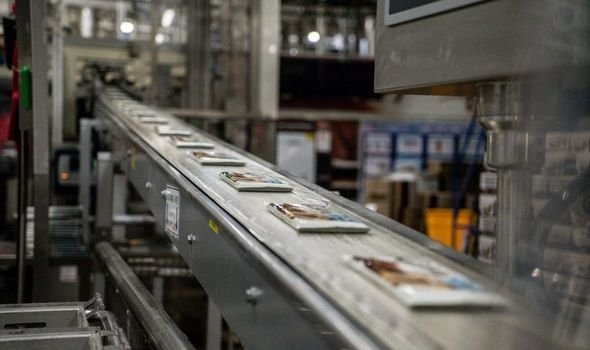
Wrapping machines process up to 300 bars per minute using specialized foil and paper to protect against moisture and oxygen.
Bars are:
- Automatically bundled
- Boxed
- Palletized by robotic arms
- Distributed to over 180 countries
The main UK facility alone produces approximately one million bars daily.
Adapting to Global Markets
The Galaxy chocolate manufacturing process is globally standardized, yet locally adapted.
Middle East and North Africa
The brand offers bite-sized assortments called jewels for gifting traditions and chocolate-covered dates celebrating regional agriculture.
India
To address high temperatures and inconsistent refrigeration, a heat-robust signature recipe was developed to maintain texture and stability.
From vegan options to limited editions inspired by baklava and Turkish delight, localization ensures cultural relevance.
Economic Impact of Galaxy Chocolate Manufacturing
The parent company, Mars, Incorporated, remains the world’s leading confectionery producer, with annual snacking sales reaching approximately $20 billion.
The cocoa industry spans over 80 countries, supporting millions of livelihoods—from West African farmers to European factory workers.
Heavy investments in digital transformation and cloud computing ensure operational efficiency and global competitiveness.
Frequently Asked Questions About the Galaxy Chocolate Manufacturing Process
1. What makes Galaxy chocolate so smooth?
Its smoothness comes from ultra-fine particle refining (15–30 microns) and extended conching, ensuring even cocoa butter distribution.
2. What is the milk crumb process?
Milk crumb is a vacuum-cooked blend of milk solids, sugar, and cocoa liquor that undergoes the Maillard reaction to create caramelized flavor notes.
3. Why is tempering important?
Tempering controls cocoa butter crystallization, giving chocolate its glossy finish and firm snap.
4. Where are the cacao beans sourced?
Primarily from tropical regions within 20° of the equator, including Côte d’Ivoire, Ghana, and Ecuador.
5. How many bars are produced daily?
The main UK facility alone produces around one million bars per day.
Galaxy chocolate manufacturing process: Conclusion
The Galaxy chocolate manufacturing process is a remarkable blend of history, chemistry, physics, and digital innovation. From hand-harvested cacao pods in equatorial rainforests to AI-monitored production lines in advanced factories, every step is engineered for perfection.
Each silky bite represents fermentation science, micron-level refinement, precision tempering, and global collaboration across more than 80 countries. It is proof that even a simple chocolate bar can embody decades of expertise and relentless quality control.
Now we would love to hear from you. Do you prefer the classic smooth milk bar, textured ripple varieties, or regionally inspired editions? Share your thoughts and let us know which part of the Galaxy chocolate manufacturing process surprised you the most.