How M&M’s Are Made: Inside the World of the Most Famous Chocolate Candy

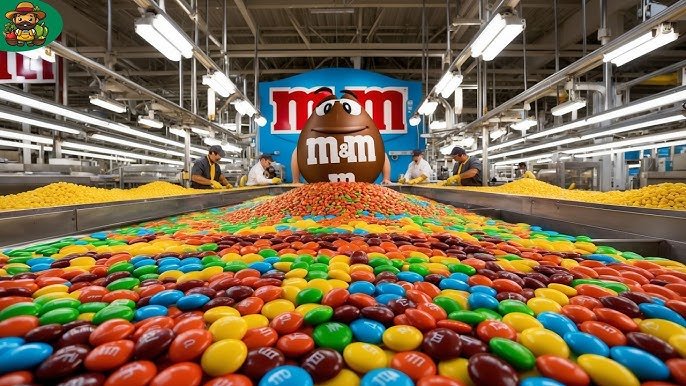
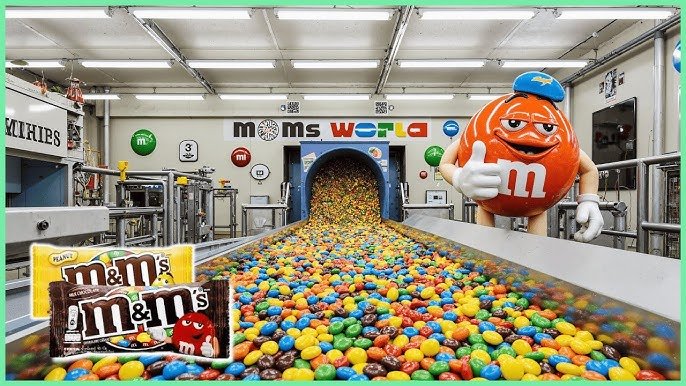
How do billions of identical candies roll off production lines every year, each perfectly round, brightly colored, and stamped with a tiny white “M”? The answer lies in the fascinating industrial journey of M&M’s production process, a system that blends wartime innovation, advanced food science, global logistics, and cutting-edge automation.
At first glance, M&M’s may seem like simple sugar-coated chocolates. Yet behind their crunchy shell lies one of the most sophisticated manufacturing systems in the confectionery world. From cocoa farms in tropical climates to robotic packaging lines running 24/7, the making of M&M’s is a story of precision, scale, and relentless quality control.
Let’s step inside the factory and uncover how this iconic candy conquered the globe.
The Wartime Origins of M&M’s
The story of M&M’s begins during World War II. Inspired by soldiers in Spain who ate chocolate pellets encased in sugar to prevent melting, Forrest Mars, son of the founder of Mars, Incorporated, recognized the product’s potential in the United States.
He partnered with Bruce Murray, son of the president of Hershey’s, creating the now-famous initials “M&M” — Mars and Murray.
In 1941, M&M’s were first manufactured in Newark, New Jersey. Their original customers were the U.S. military. The candy shell prevented melting, making them ideal for overseas transport in hot climates.
After the war, M&M’s were introduced to the general public — and quickly became a household staple.
Global Expansion and Product Innovation
Over the decades, M&M’s evolved beyond the original milk chocolate version. Today, varieties include:
- Peanut
- Crispy
- Pretzel
- Caramel
- And numerous seasonal and limited-edition flavors
Each new product launch is strategically designed to reach different consumer segments. Sold in more than 100 countries, M&M’s are produced in state-of-the-art facilities that combine traditional chocolate-making techniques with advanced automation.
Yet regardless of variety, every piece begins the same way: with chocolate.
The Raw Materials Behind M&M’s Production Process
Cocoa Beans: The Foundation of Flavor
Cocoa beans used in M&M’s are sourced from regions such as:
- West Africa
- South America
- Parts of Asia
After harvesting, the beans are fermented, dried, shipped, roasted, and ground into cocoa liquor. Only beans meeting strict flavor and quality standards are selected.
Sugar: The Essential Sweetness
Sugar is derived from sugar cane and sugar beet farms across the Americas and Europe. After refinement and granulation, it is transported in bulk to confectionery factories.
Peanuts and Specialty Ingredients
For peanut varieties, nuts are sourced from the United States, Argentina, and India. They must meet strict criteria for:
- Size uniformity
- Texture
- Crunch quality
All ingredients arrive in massive truckloads or shipping containers and are stored in towering silos holding thousands of kilograms of raw materials.
The logistics required to maintain this supply chain operate continuously to keep factories running 24/7.
“Read Also: Lamb Processing Plant: The Incredible Journey from Farm to Perfect Lamb Shank“
Chocolate Creation: Precision at the Molecular Level
Once inside the factory, the transformation begins.
Cocoa liquor is combined with:
- Milk
- Sugar
- Cocoa butter
This mixture is refined through steel rollers until it reaches a particle size measured in microns. The smaller the particles, the smoother the texture.
Conching: Developing Flavor
The chocolate is then conched — continuously mixed and heated to develop flavor complexity and create the velvety mouthfeel consumers expect.
Tempering: Ensuring Shine and Stability
Tempering is a delicate heating and cooling cycle that aligns cocoa butter crystals perfectly. This prevents fat bloom and ensures:
- Glossy appearance
- Proper snap
- Structural stability
Once tempered, the chocolate is molded into tiny spherical or lentil-shaped centers.
For peanut M&M’s, roasted peanuts are coated with chocolate before cooling and hardening.
The Iconic Candy Shell: The Art of Panning
The defining feature of M&M’s is their hard candy shell — the innovation that made them famous.
This stage uses a technique called panning.
Thousands of chocolate centers are placed into rotating drums. Liquid sugar syrup is gradually sprayed onto them while warm air dries each layer. This layering process is repeated multiple times until the shell reaches the required thickness.
Adding the Signature Colors
Food-grade dyes are added in carefully controlled batches to produce the classic colors:
- Red
- Blue
- Yellow
- Green
- Orange
- Brown
Modern factories rely on automated sensors to ensure:
- Uniform shell thickness
- Accurate color intensity
- Balanced color assortment per package
What appears to be a simple coating is, in fact, a carefully engineered protective layer that enhances crunch and preserves freshness.
“Read Also: Industrial Marmalade Production: Inside the High-Tech Process Behind Every Jar“
Printing the Legendary “M”
Once the shells are hardened, the candies move to high-speed printing machines.
Each piece passes under precision rollers that gently stamp the white “M” using vegetable-based ink. Sensors ensure:
- Proper alignment
- Correct positioning
- No shell cracking
This tiny mark is more than decoration — it is a powerful branding symbol. The trademarked “M” distinguishes authentic M&M’s from imitators in a competitive marketplace.
Quality Control: Engineering Perfection
One of the most impressive aspects of the M&M’s production process is quality assurance.
Factories operate around the clock, yet maintain near-perfect consistency.
Automated Inspection
Cameras and optical scanners remove:
- Misshaped candies
- Misprinted pieces
- Color defects
Physical Testing
Machines measure:
- Shell hardness
- Chocolate thickness
- Shape uniformity
Taste Testing
Trained panels evaluate:
- Flavor
- Crunch
- Melt-in-the-mouth experience
Heat Resistance Testing
Samples are exposed to elevated temperatures to ensure the shell effectively prevents melting.
The goal is simple: every M&M must taste identical, whether produced in New Jersey, Illinois, or the United Kingdom.
Packaging and Global Distribution
After passing inspection, the candies move to automated packaging lines.
Robotic systems:
- Weigh exact quantities
- Fill pouches, tubes, and share bags
- Seal packaging with heat
- Assemble multi-pack cartons
Bulk bags are prepared for cinemas, vending machines, and food service providers.
Pallets of finished products fill massive warehouses before being shipped worldwide via trucks and containers.
The distribution network ensures M&M’s reach supermarkets, airports, and convenience stores in over 100 countries.
From factory floors in New Jersey or Slough, England, a single candy may travel thousands of miles — yet remain perfectly preserved.
Economic Impact and Brand Power
Owned by Mars, Incorporated, M&M’s generate billions of dollars annually.
The brand consistently ranks among the top-selling chocolate candies worldwide. Its identity extends beyond candy into:
- Merchandise
- Advertising campaigns featuring animated mascots
- Sponsorships of global sporting events
The economic ecosystem supporting M&M’s spans:
- Cocoa farming communities
- Sugar production industries
- Logistics networks
- Manufacturing facilities
- Retail distribution
Thousands of jobs worldwide depend on the continued success of this single product.
The Industrial Scale Behind a Simple Candy
Few products illustrate the combination of simple design and complex industry as clearly as M&M’s.
Behind every colorful piece lies:
- International agriculture
- Advanced food science
- Mass automation
- Legal trademark protections
- Sophisticated global logistics
What began as a wartime innovation evolved into a symbol of fun, reliability, and industrial precision.
Frequently Asked Questions About M&M’s Production Process
1. Why don’t M&M’s melt easily?
The sugar shell created through panning protects the chocolate core from heat and direct contact, slowing melting.
2. How are the colors applied?
Food-grade dyes are layered onto the candy shell during the panning stage in carefully controlled batches.
3. What ensures all M&M’s look identical?
Advanced sensors, automated inspection systems, and strict quality control protocols remove imperfect candies.
4. Where do cocoa beans for M&M’s come from?
They are sourced from regions such as West Africa, South America, and parts of Asia.
5. What does the “M” stand for?
The “M” represents Mars and Murray, the two founding partners behind the candy.
Conclusion: The Remarkable Journey of M&M’s Production Process
The story of M&M’s production process is far more complex than its colorful appearance suggests.
From tropical cocoa farms to automated printing machines stamping thousands of candies per minute, each stage reflects a seamless blend of science, engineering, and branding brilliance.
What began as a practical wartime solution has become one of the most recognizable candies on Earth — a product that proves how industrial mastery can transform a simple idea into a global phenomenon.
Next time you open a bag of M&M’s, take a moment to appreciate the scale of effort behind each tiny piece.
Which variety is your favorite — classic milk chocolate, peanut, or something more adventurous? Share your thoughts and join the conversation!