Mass-Produced Cinnamon Rolls: From Farm to Factory to Your Plate

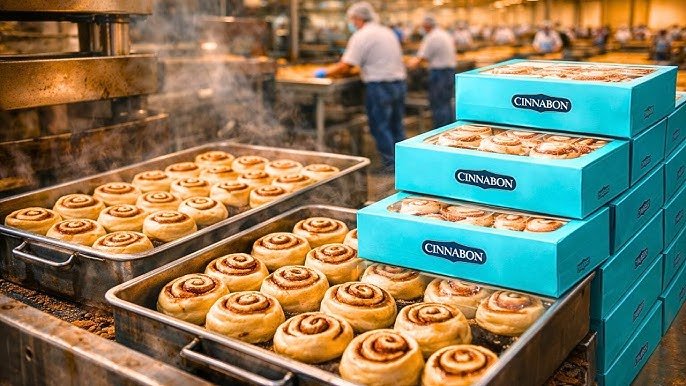
Mass-produced cinnamon rolls are more than just a sweet breakfast indulgence—they are a global phenomenon. One famous bakery chain alone sells over 100 million cinnamon rolls each year, proving that this gooey spiral of dough, sugar, and spice has secured a permanent place in the hearts (and stomachs) of millions.
But how do simple ingredients like flour, sugar, butter, and cinnamon transform into one of the world’s most beloved pastries? How does something so humble become an industrial-scale product without losing its comforting appeal?
In this in-depth guide, we pull back the curtain on the factory secrets behind mass-produced cinnamon rolls. From tropical cinnamon farms to high-tech conveyor ovens producing thousands of rolls daily, you’ll follow every step of the journey. By the end, you’ll understand exactly how your favorite cinnamon roll goes from raw ingredients to the warm, fragrant treat on your plate—and you may appreciate every bite even more.
The Origins of Cinnamon Rolls: From Europe to Global Fame
The story of cinnamon rolls stretches back centuries. While many associate the pastry with Scandinavia—particularly Sweden—its roots trace to 16th-century Germany. Early cinnamon-laced buns known as schnecken (meaning “snails”) were among the first recorded spiral pastries flavored with cinnamon.
Cinnamon itself had arrived in Europe long before that through Arab trade routes. For centuries, it was considered a luxury spice. Historical accounts even claim that Roman Emperor Nero burned an entire year’s supply of cinnamon at his wife’s funeral to display his wealth.
It wasn’t until the 18th and 19th centuries that cinnamon became more accessible to ordinary people. Scandinavian countries enthusiastically embraced the spiced bun:
- In Norway, it became known as Skillingsbolle.
- In Sweden, the modern kanelbulle emerged after World War I, when butter and sugar became more affordable.
- By the 1950s, cheaper butter helped cinnamon buns become a staple of Swedish culture.
Since the late 1990s, Sweden has celebrated an official Cinnamon Bun Day every year in early October, with millions sold in a single day. On average, one Swede consumes more than 300 cinnamon buns annually.
German immigrants later brought cinnamon rolls to America, where they evolved into the gooey, cream cheese–iced versions commonly found in diners and shopping malls. By the mid-1980s, dedicated bakery chains transformed the cinnamon roll into a commercial powerhouse, scaling production to industrial levels while preserving its indulgent charm.
“Read Also: Dyson Cordless Vacuum Technology“
Mass-Produced Cinnamon Rolls: Sourcing Ingredients from Around the World
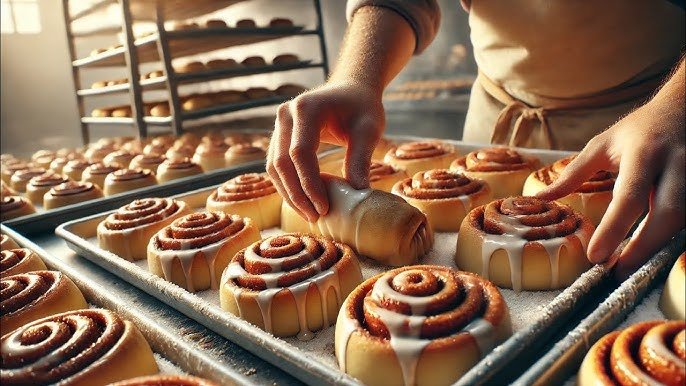
Every batch of mass-produced cinnamon rolls begins far from the factory floor. Before dough rises in giant mixers, raw materials are sourced from farms and forests across the globe.
Flour: The Structural Backbone
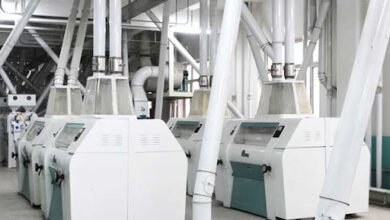
Flour forms the foundation of every cinnamon roll. Wheat is grown on a massive global scale, with hundreds of millions of metric tons harvested annually. This wheat is milled into fine flour and shipped in bulk to commercial bakeries.
In industrial settings, flour often arrives in tanker trucks and is stored in massive silos, ready to be measured precisely into production lines.
Sugar: Sweetness and Fermentation Fuel
Sugar serves two key roles:
- Providing sweetness
- Feeding yeast during fermentation
It is sourced from either sugar cane grown in tropical regions or sugar beet farms in cooler climates. Pallets stacked high with sugar are delivered to factories, where consistency is critical.
Butter and Fats: Richness and Tenderness
Butter—or sometimes shortening—adds flavor, softness, and richness to the dough. Produced on dairy farms, it is delivered to factories in solid blocks or liquid form, depending on the production system.
Cinnamon: The Signature Spice
The defining ingredient in mass-produced cinnamon rolls is cinnamon itself. Derived from the inner bark of the cinnamon tree, most global cinnamon production comes from Asia.
After harvest, the bark is:
- Dried
- Curled into quills
- Ground into fragrant powder
Factories purchase cinnamon in large sacks, carefully selecting varieties to ensure consistent flavor and aroma.
Supporting Ingredients
Additional components include:
- Yeast
- Eggs or liquid egg products
- Milk or milk powder
- Salt
At industrial scale, logistics are everything. Each ingredient is tested for quality before entering production. Consistency at this stage ensures consistency in every finished roll.
“Read Also: Galaxy Chocolate Manufacturing Process“
Inside the Factory: How Mass-Produced Cinnamon Rolls Are Made
Once ingredients arrive at the factory, precision and automation take control.
Mixing the Dough
Automated systems weigh and measure hundreds of pounds of flour, sugar, and dry ingredients. Pumps deliver exact amounts of water, milk, and eggs into enormous stainless-steel mixers capable of handling dough for thousands of rolls at once.
The mixing process is carefully staged:
- Slow blending to allow gluten formation
- Gradual addition of butter or fat
- Development of a soft, elastic yeast dough
Within minutes, separate powders and liquids transform into a cohesive mass ready for fermentation.
Fermentation: The Rise of Flavor
After mixing, dough moves into fermentation containers or temperature-controlled tunnels. Here, yeast consumes sugars and releases carbon dioxide gas.
That gas becomes trapped in the dough’s gluten network, causing it to rise. This bulk fermentation typically lasts between 30 minutes and one hour, allowing the dough to double in size.
By the end of this stage, the dough is airy, elastic, and ready for shaping.
“Read Also: Popeyes Chicken Production Process“
Rolling and Shaping Mass-Produced Cinnamon Rolls
After rising, the dough is gently degassed and fed into sheeting machines. Large rollers flatten it into continuous sheets several feet wide, moving steadily along conveyor belts.
Thickness is precisely controlled to ensure the final rolls are soft rather than dense.
Applying the Cinnamon Filling
A mixture of:
- Sugar
- Cinnamon
- Fat
is evenly spread across the dough sheet. Some factories brush melted butter first, while others use automated depositors.
The aroma of cinnamon fills the production floor as technicians monitor coverage for uniform flavor distribution.
Creating the Signature Spiral
The filled dough is rolled into long logs using automated rolling systems. The machinery applies just enough pressure to form tight spirals without squeezing out the filling.
Precision cutters slice the log into evenly sized portions, each displaying the perfect swirl.
The rolls are then placed onto trays or into pans for final proofing.
Proofing and Baking: Transforming Dough into Golden Rolls
Inside warm, humid proofing chambers set at approximately 40°C, the rolls rest for 30 to 45 minutes. This second rise allows them to expand further before baking.
Next comes baking in large conveyor ovens heated to roughly 205°C. Rolls bake for around 12 to 15 minutes, emerging:
- Golden brown on the outside
- Soft and fluffy inside
- Richly fragrant
A short cooling period prepares them for icing and packaging.
Quality Control in Mass-Produced Cinnamon Rolls
Producing mass-produced cinnamon rolls at scale demands strict quality standards.
Automated Monitoring
Sensors track:
- Color
- Height
- Texture
Weight-checking systems ensure every package meets labeling requirements.
Safety Measures
Metal detectors and X-ray scanners protect against contaminants. Cinnamon quality is also monitored carefully, as certain natural compounds are regulated in specific regions.
Hygiene and Testing
Factories maintain strict sanitation protocols and conduct microbiological testing to prevent contamination.
The Final Test: Taste
Quality teams sample rolls from every batch to verify:
- Flavor balance
- Softness
- Sweetness
- Aroma
Even at industrial scale, taste remains king.
Not All Cinnamon Rolls Are the Same
While traditional yeast-based rolls dominate the market, variations exist:
- Cinnamon roll doughnuts (fried instead of baked)
- Laminated pastry swirls (flaky rather than soft)
- Sticky buns with caramel and nuts
Each variation uses different techniques but shares cinnamon’s signature appeal.
Packaging and Distribution: From Factory to Storefront
After cooling, many mass-produced cinnamon rolls receive icing. Automated drizzle systems or workers apply cream cheese frosting or glaze.
They are then packaged using:
- Clamshell containers
- Trays
- Sealed film wraps
Some are flash-frozen for later baking, while others ship fresh.
Refrigerated or frozen trucks transport them to supermarkets, cafés, airports, and bakeries worldwide. Strategic oven placement at retail locations ensures the irresistible aroma draws customers in.
The Global Industry of Mass-Produced Cinnamon Rolls
Cinnamon rolls are big business. Major brands operate thousands of locations across dozens of countries, selling hundreds of millions of rolls annually.
In Sweden alone, millions are consumed during Cinnamon Bun Day. Globally, the cinnamon spice market is valued at well over $1 billion, supporting:
- Farmers
- Manufacturers
- Logistics providers
- Retailers
From forest bark to factory oven, mass-produced cinnamon rolls symbolize comfort, indulgence, and industrial efficiency.
Frequently Asked Questions About Mass-Produced Cinnamon Rolls
1. How are mass-produced cinnamon rolls different from homemade ones?
Mass-produced cinnamon rolls are made using automated systems and strict quality controls, ensuring consistency in size, flavor, and texture across thousands of units.
2. Where does the cinnamon in cinnamon rolls come from?
Most cinnamon is grown in Asia. The spice comes from the inner bark of the cinnamon tree, which is dried, curled, and ground into powder.
3. How long does the fermentation process take?
Bulk fermentation typically lasts between 30 minutes and one hour, allowing the dough to rise and develop flavor before shaping.
4. Are all cinnamon rolls baked the same way?
No. While most are baked in conveyor ovens, some variations—like cinnamon roll doughnuts—are fried instead of baked.
5. How do factories ensure safety and quality?
Factories use automated monitoring systems, metal detectors, X-ray scanners, sanitation protocols, and taste testing to maintain high standards.
Conclusion: The Sweet Science Behind Mass-Produced Cinnamon Rolls
Mass-produced cinnamon rolls represent a fascinating blend of tradition and technology. What began centuries ago as a simple spiced bun has evolved into a global icon produced with industrial precision.
From wheat fields and tropical spice farms to stainless steel mixers and conveyor ovens, every step is carefully controlled to deliver the same warm, gooey satisfaction in every bite.
The next time you enjoy a cinnamon roll, remember the remarkable journey it has taken—from bark to batter, from fermentation to frosting. Understanding how mass-produced cinnamon rolls are made doesn’t just satisfy curiosity—it deepens appreciation for one of the world’s most comforting treats.
If you enjoyed this behind-the-scenes look, consider sharing it or exploring more insights into how your favorite foods are made.