Popeyes Chicken Production Process: From Farm to the Perfect Golden Crunch

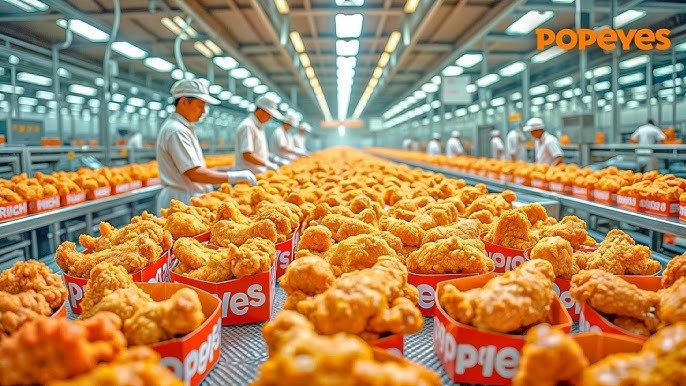
The Popeyes Chicken Production Process is far more complex than simply dropping chicken into hot oil. Behind every perfectly golden, crispy piece served in restaurants across the globe lies a sophisticated system built on logistics, food science, culinary tradition, and industrial precision.
What began as a small Louisiana restaurant in 1972 has evolved into a multi-billion-dollar empire capable of serving hundreds of millions of pounds of fresh poultry every year—without compromising flavor.
From fertile American farms to high-tech commercial kitchens, every stage is engineered to deliver the same bold, Southern-inspired taste that customers have loved for over five decades.
But how does a single kitchen concept scale into a global powerhouse while maintaining consistency? Let’s step behind the counter and uncover the fascinating journey from farm to fryer.
The Origins of a Culinary Icon
The story begins in 1972 in a suburb of New Orleans, Louisiana. Entrepreneur Alvin Charles Copeland Sr. opened a restaurant called “Chicken on the Run,” hoping to compete with established national chains. However, the original recipe was considered too mild for the local community, which was accustomed to the bold and layered flavors of Cajun and Creole cuisine.
Recognizing the need for change, Copeland reformulated his recipe, developing a spicier, more authentic New Orleans–style seasoning blend. Inspired by the character Popeye Doyle from The French Connection, he rebranded the restaurant as Popeyes. This pivot toward bold flavor profiles sparked rapid growth, transforming a struggling local shop into a regional sensation and eventually a global franchise.
Today, the brand celebrates Louisiana’s culinary heritage while operating on an industrial scale few food chains can match.
Sourcing the Foundation: High-Quality Poultry
At the core of the Popeyes Chicken Production Process is premium poultry sourced from an extensive agricultural network across the United States.
The Broiler Belt Advantage
Most birds are raised in what is known as the “broiler belt,” a region including states such as Georgia, Arkansas, and Alabama. These areas specialize in poultry farming and offer controlled environmental conditions to ensure consistent size and weight.
Uniformity is essential. Each bird must reach a target weight within approximately six to seven weeks. They are typically sustained on a corn- and soy-based diet to promote healthy, predictable growth. Consistency at this stage directly affects cooking times and final product quality across thousands of restaurant locations.
Refrigerated Logistics on a Massive Scale
Transporting millions of birds annually requires a vast refrigerated trucking network operating 24/7. Each truck maintains a temperature just above freezing to preserve freshness without fully freezing the meat—a critical quality standard for the company.
This delicate balance ensures the poultry arrives fresh, maintaining the texture and flavor necessary for the signature product.
Building the Signature Flavor Profile
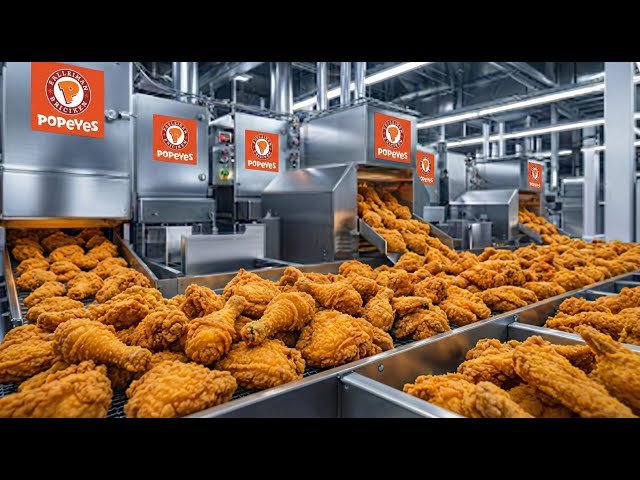
Beyond the poultry itself, the unmistakable taste depends on a carefully engineered spice blend.
Precision in Spice Blending
The seasoning foundation includes high-grade cayenne pepper for heat, combined with garlic, onion, black pepper, and a proprietary blend of herbs. These ingredients are processed in massive industrial facilities where batches weighing thousands of pounds are blended with mathematical precision.
Automated scales ensure exact spice ratios. Even minor deviations could alter the flavor of millions of meals. Once mixed, the seasoning is sealed in airtight containers and distributed globally, ensuring that a restaurant in Tokyo uses the exact same blend as one in New Orleans.
This level of control is essential to maintaining consistency within the Popeyes Chicken Production Process.
“Read Also: Dyson Cordless Vacuum Technology“
The Crucial 12-Hour Marination Stage
One of the defining elements that sets Popeyes apart is its extended marination process.
Deep Flavor Infusion
Upon arrival at preparation facilities, the poultry undergoes a 12-hour marination in a liquid brine infused with the signature spice blend. This extended soak allows flavors to penetrate deep into the muscle fibers rather than simply coating the surface.
In large-scale operations, vacuum tumblers are often used. These rotating drums apply pressure that opens the pores of the meat, accelerating marinade absorption while preserving tenderness.
At the restaurant level, the tradition of a full 12-hour soak is strictly maintained. This ensures that flavor remains consistent from the first bite to the last.
Hand-Battering: Crafting the Iconic Crust
The next stage in the Popeyes Chicken Production Process is the meticulous breading procedure responsible for its legendary crunch.
The Two-Component System
The crust is built using:
- A liquid batter wash
- A seasoned high-protein flour mixture
The flour’s protein content is carefully selected to create a rugged, craggy surface when exposed to hot oil.
The “20-Time Toss” Technique
Employees use a specific method known as hand battering. Each piece is dipped into the liquid wash and then tossed in seasoned flour using a precise motion called the “20-time toss.”
This controlled tossing technique ensures flour adheres in irregular clumps. These clumps later expand into the crispy ridges that define the brand’s texture.
Busy locations can use hundreds of pounds of flour daily—demonstrating the scale of this operation.
“Read Also: DJI Drone Manufacturing“
Precision Frying and Food Science
The frying stage represents a masterclass in commercial kitchen engineering.
Temperature-Controlled Deep Fryers
Coated pieces are placed into specialized fryers filled with high-quality vegetable oil heated to exactly 350°F. When cold poultry hits hot oil, it triggers the Maillard reaction—a chemical process responsible for the golden-brown color and complex savory flavor.
Microprocessors monitor oil temperature every second. If it drops due to cold poultry insertion, heating elements adjust automatically. This guarantees a crispy exterior and moist interior.
Bone-in chicken typically cooks for 12 to 15 minutes until reaching the safe internal temperature of 165°F.
Uniform Cutting for Consistent Cooking
Uniformity is crucial. In processing plants, laser-guided cutting tools divide breasts, thighs, wings, and drumsticks with precision. Even slight weight differences can disrupt cooking consistency.
Advanced sensors detect pieces that deviate by just a few grams, redirecting them away from the production line.
Quality control teams conduct frequent sensory evaluations—checking color, crunch, and aroma. Any piece that appears too dark or too pale is discarded, reinforcing customer trust.
Side Items: Consistency Beyond the Chicken
The industrial rigor extends to side dishes as well.
Buttermilk Biscuits
The famous biscuits use chilled shortening to create flaky layers as moisture evaporates in the oven. Even the flour for biscuits is sourced from specific mills to maintain a precise protein content.
Centralized Side Production
Items like red beans and rice or mashed potatoes are often prepared in centralized kitchens to maintain a uniform flavor profile across all locations.
Every ingredient—no matter how small—adheres to strict quality standards within the Popeyes Chicken Production Process.
“Read Also: Galaxy Chocolate Manufacturing Process“
Packaging, Storage, and Distribution
Once processed and marinated, poultry is vacuum-sealed and placed into insulated containers.
Cold Storage and Automation
Automated forklifts transport sealed packages into massive refrigerated warehouses. A real-time tracking system ensures restaurants receive deliveries exactly when needed.
This “just-in-time” distribution minimizes storage time and guarantees freshness.
Thousands of pallets move daily across the country to keep kitchens fully supplied and ready for service.
Economic and Global Impact
The scale of this operation contributes significantly to a global fast-service dining market valued at hundreds of billions of dollars.
The brand provides employment to tens of thousands—from farmers and logistics coordinators to food scientists and researchers.
In 2019, the overwhelming success of the chicken sandwich demonstrated the strength of this supply chain. The company rapidly scaled operations to meet unprecedented demand, proving that legacy brands can still capture new generations.
Tradition Meets Modern Industry
From ingredient sourcing to final frying, the Popeyes Chicken Production Process blends Southern culinary tradition with modern industrial engineering.
Every stage—from the 12-hour soak to the hand-tossed breading—exists to produce a specific sensory experience:
- Deep internal flavor
- Crunchy, textured crust
- Moist, tender interior
- Consistent golden color
The result is a product rooted in Louisiana heritage yet powered by global logistics and advanced technology.
Frequently Asked Questions About Popeyes Chicken Production Process
1. What makes the Popeyes marination process unique?
The 12-hour marination allows spices to penetrate deeply into the meat fibers rather than just coating the surface.
2. Why is uniform chicken size so important?
Uniform size ensures consistent cooking times, preventing undercooked interiors or burnt exteriors.
3. What creates the signature crunch?
The combination of high-protein flour and the 20-time toss technique forms irregular ridges that crisp during frying.
4. How is frying consistency maintained?
Microprocessor-controlled fryers monitor oil temperature continuously to maintain precise cooking conditions.
5. How does Popeyes maintain global flavor consistency?
Spices are blended in centralized facilities with strict measurements, ensuring every location uses the same seasoning ratios.
Popeyes Chicken Production Process: Conclusion
The Popeyes Chicken Production Process is a remarkable fusion of culinary heritage and modern engineering. What appears to be a simple fried chicken meal is actually the result of controlled farming, precision logistics, scientific marination, expert hand-breading, and technologically advanced frying systems.
Every step is designed to deliver the same legendary crunch and bold Southern flavor—whether served in Louisiana, London, or Tokyo.
Now that you understand the science and scale behind every piece of chicken, which part surprised you the most—the 12-hour marination or the 20-time toss breading method?
Share your thoughts in the comments, and let us know which famous food chain you’d like explored next.